Anadara scalarina
Geological Range
Late Pliocene to Middle Pleistocene; Extinct.
Paleogeographic Distribution
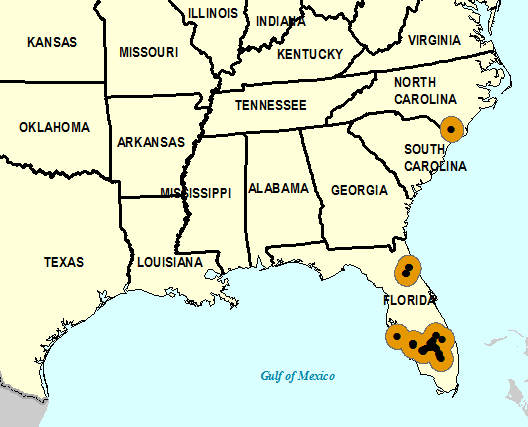
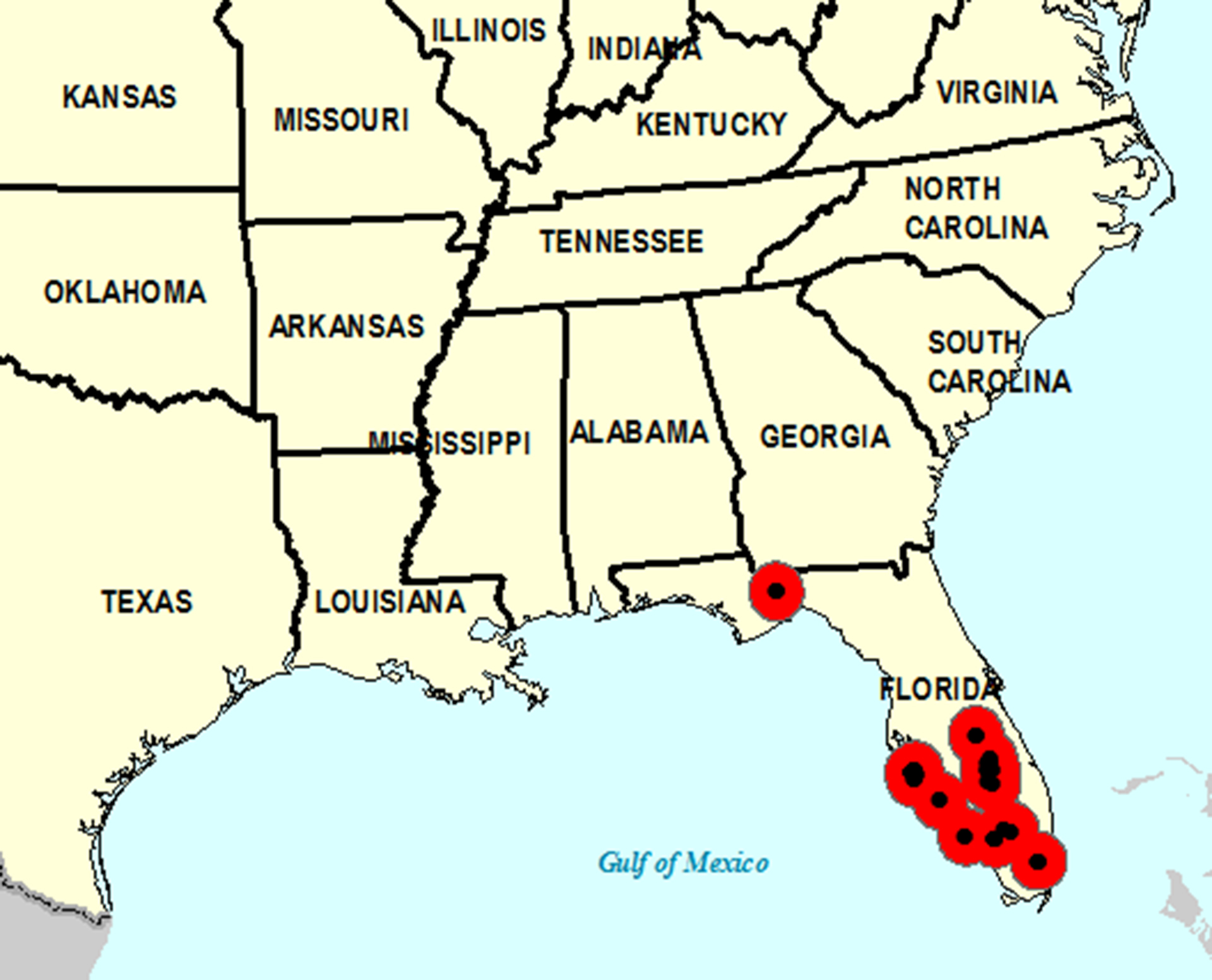
Southern Florida to North Carolina.
Remarks
Some workers recognize this species as Scapharca scalarina.
Original Description (from Heilprin, 1886, p. 94-96):
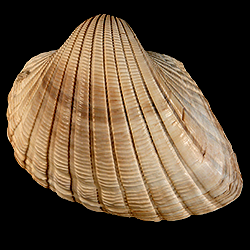
"Shell obliquely rhomboidal, elevated, ventricose, angulated posteriorly, flattened; anterior end short, everjy rounded; beaks prominent, transverse, about eight, distant; ligament-area diamond-shaped, nearly smooth in the young shell, with delicate transverse lines in the adult, with a limited number of coarse, sinuous longitudinal lines; hinge-line straight, somewhat more than one-half the greatest length of shell; teeth numerous, somewhat oblique toward either end. Ribs prominent, about twenty-four, broad, square, robustly crenate, those of the left valve broader than the interspaces, flattened posteriorly, about eight on the anal angulation; those of the right valve of about the same width as the interspaces (the anterior ones the broadest), with an interstitial secondary rounded rib in the centre of the interspace; the two valves unequal, the basal margin of the left valve greatly protruding beyond that of the right; base profoundly crenulated.
Length, 3.3 inches; height, 2.5 inches.
Abundant in the banks of the Caloosahatchie below Fort Thompson."
Stratigraphic Occurrences
- Middle Pleistocene
- Bermont Formation (S. FL)
- Early Pleistocene
- Caloosahatchee Formation (S. FL)
- Caloosahatchee Formation (Bee Branch Member) (S. FL)
- Nashua Formation (N. FL)
- Waccamaw Formation (NC)
- Late Pliocene
- Jackson Bluff Formation (N. FL)
- Tamiami Formation (Lower) (S. FL)
- Tamiami Formation (Pinecrest Beds) (S. FL)
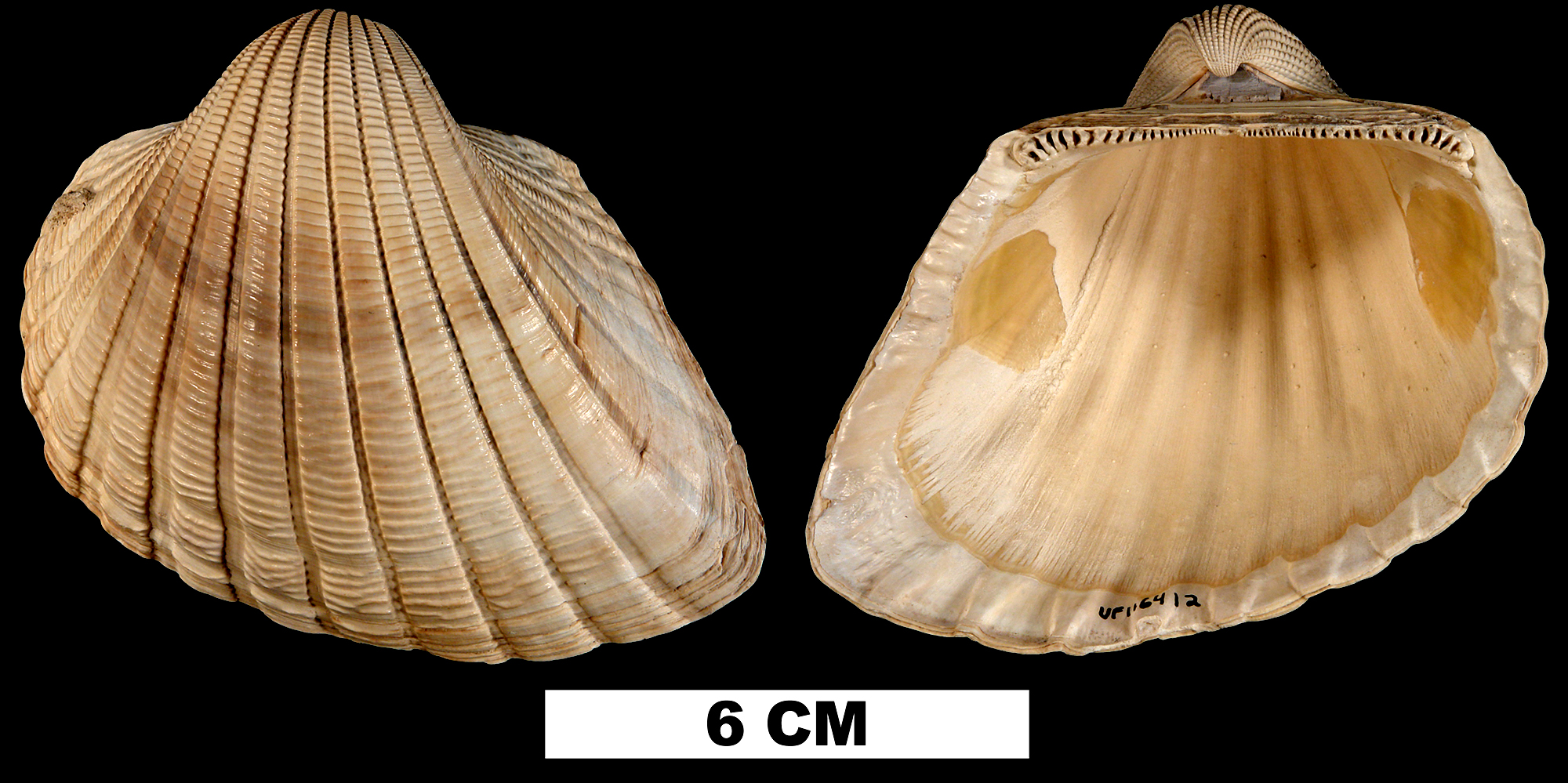
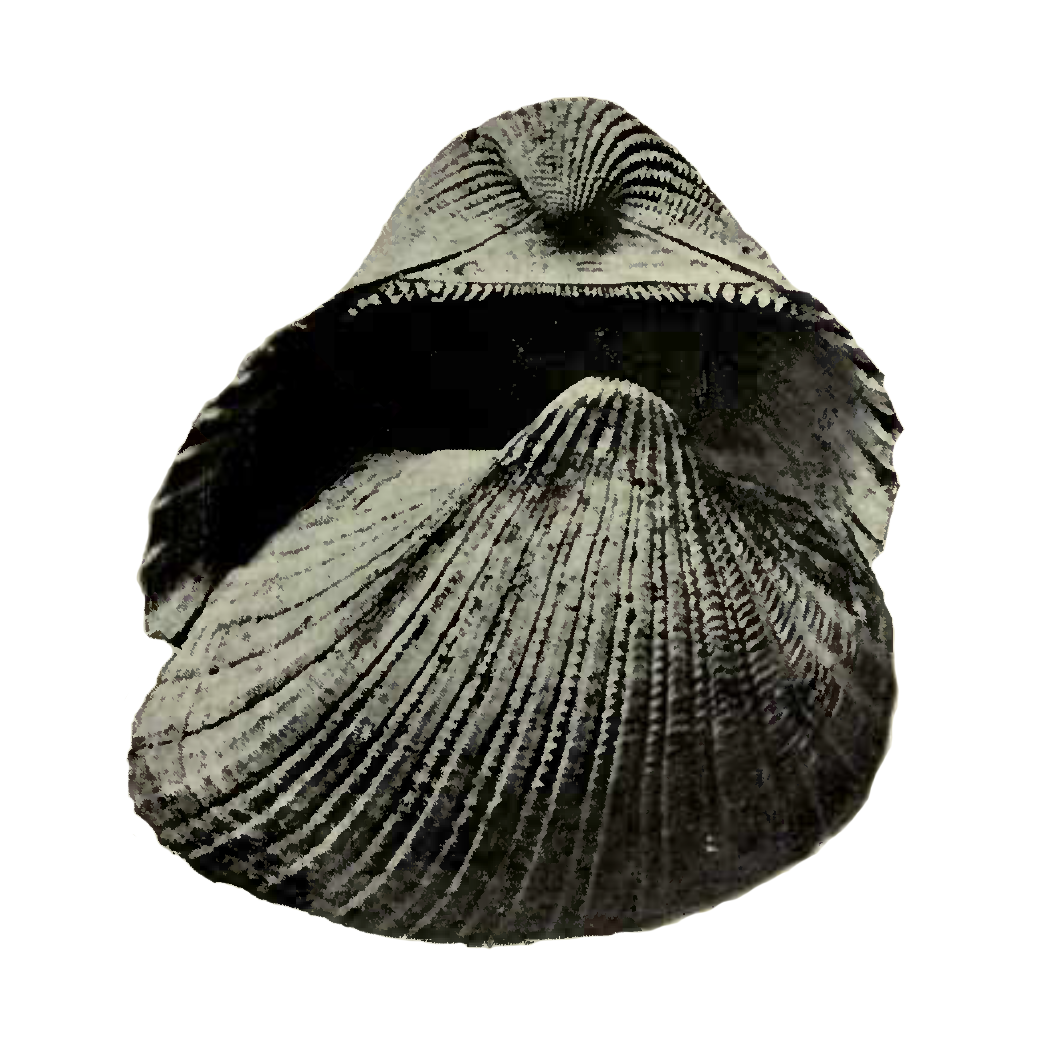
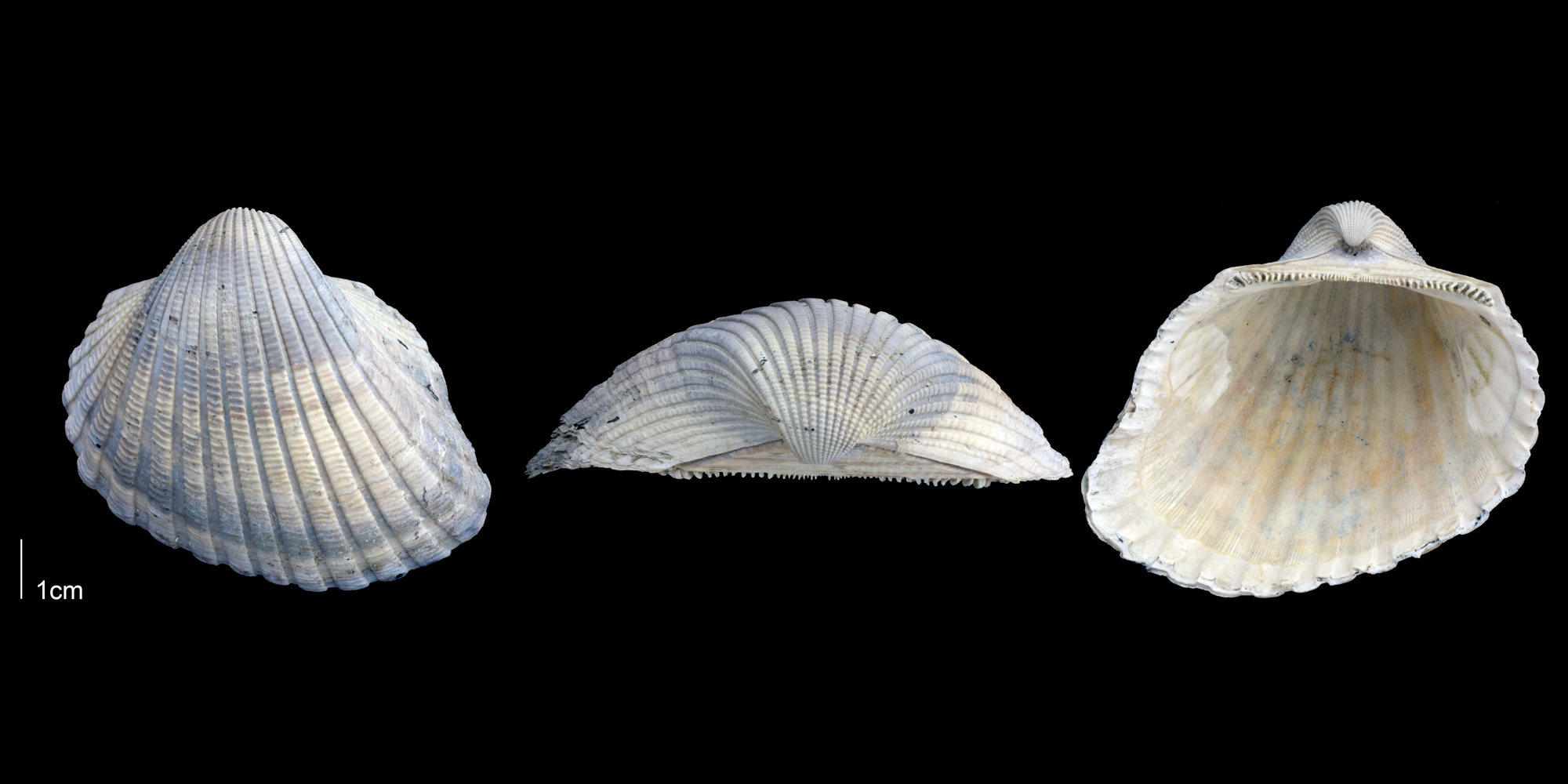

![Specimens of <i>Anadara scalarina</i> (PRI 70061 [left], PRI 70089 [two right]) from the late Pliocene Tamiami Fm. of Sarasota County, Florida. Bottom row of images shows enlarged views of the hinge regions of each specimen.](https://neogeneatlas.net/wp-content/uploads/Anadara_scalarina-PRI70061-70089-2000px.png)